
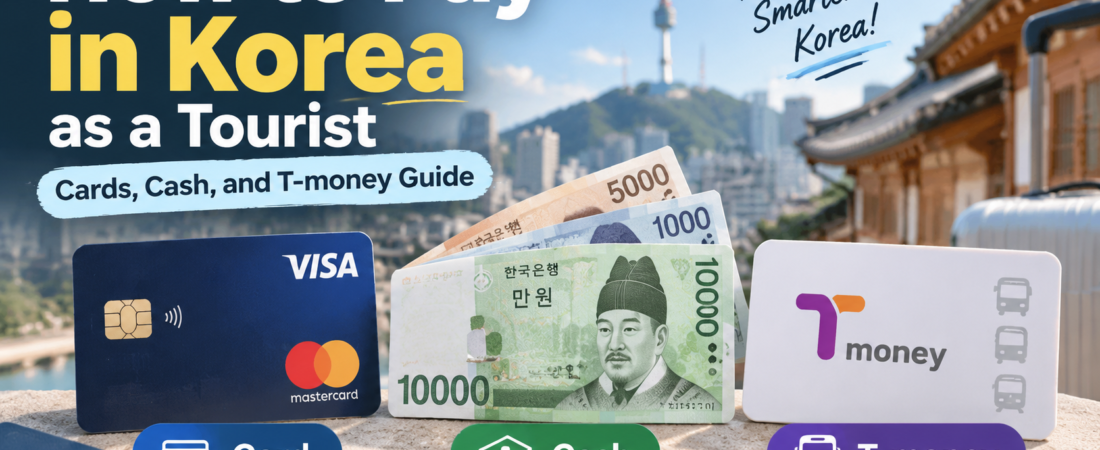
You order your coffee, open your wallet, and realize you are not sure which payment method will actually work in Korea.
For most travelers, paying in Korea is easier than expected. Credit cards are widely accepted, but there are still situations where cash, a transportation card, or another payment option can make your trip smoother.
Understanding how to pay in Korea as a tourist before your trip helps you avoid small problems at restaurants, markets, transportation stations, and local stores.
Can tourists use credit cards in Korea?
International travelers can use many foreign credit and debit cards in Korea, especially at hotels, department stores, restaurants, cafes, and larger shops.
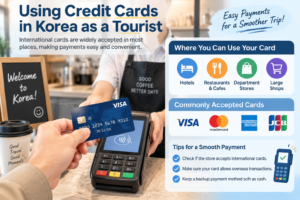
Visa and Mastercard are commonly accepted, but smaller stores or traditional markets may have different payment options.
Before paying, check the card terminal or ask the staff if international cards are accepted. Some smaller businesses may prefer local payment methods or cash.
When do you need cash in Korea?
Korea has become a highly digital payment environment, but cash is still useful in certain situations.
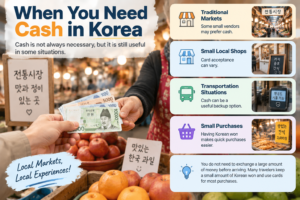
- Traditional markets: Some small vendors may prefer cash.
- Small local shops: Card acceptance can vary.
- Transportation situations: Cash can be a backup option.
- Small purchases: Having Korean won can make quick purchases easier.
You do not need to exchange a large amount of money before arriving. Many travelers keep a small amount of Korean won and use cards for most purchases.
How does T-money work for tourists?
T-money is mainly used for public transportation, including buses and subways in Korea.
It is not a replacement for a normal payment card, but it is one of the easiest ways to pay for transportation without buying individual tickets.
Many travelers purchase a T-money card when they arrive because it makes daily transportation simpler.
For details about buying and using a transportation card, check our T-money Card guide.
Can foreigners use Korean mobile payments?
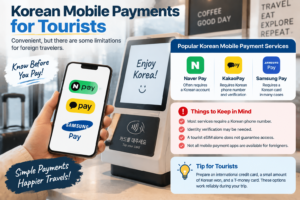
Korean mobile payment services are convenient, but many require local accounts, Korean phone numbers, or identity verification.
This is different from simply receiving an SMS or having mobile data. A tourist eSIM or phone number does not automatically allow access to every Korean payment service.
If you encounter a verification issue, check our Korean phone number for tourists guide.
Payment problems tourists often experience
Your card is declined
If a card does not work, check whether international transactions are enabled by your bank. Trying another card or payment method can also solve the problem quickly.
The payment terminal asks for a Korean option
Some self-service machines may be designed mainly for local users. In these situations, asking staff for help is often faster than repeatedly trying different options.
You are unsure about the final amount
Always check the payment screen before confirming. Korean payment terminals usually show the amount before the transaction is completed.
What payment method should you prepare before visiting Korea?
A simple combination works well for most travelers:
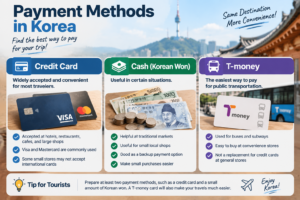
- Main payment: International credit or debit card
- Transportation: T-money card
- Backup: Small amount of Korean won
You do not need to carry only cash or depend on one payment method. Preparing two or three options gives you more flexibility during your trip.
Before your Korea trip, check your payment setup
Before departure, confirm that your card allows overseas payments and remember your bank’s emergency contact information.
For longer trips, it is also useful to check whether your accommodation, restaurants, and activities accept the payment methods you plan to use.
Most payment problems in Korea are not caused by the country being difficult to navigate. They usually happen because travelers expect every service to work exactly like it does at home.
A little preparation before arrival makes daily payments much easier.